
List of 20+ Famous Monuments of India: A Journey Through Its Majesty
By Admin | Date 03-11-2025
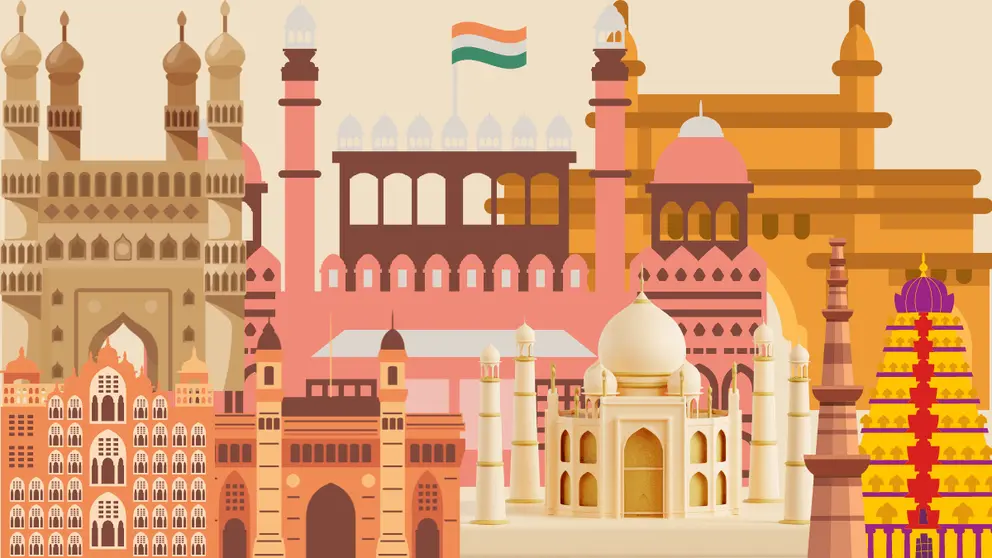
India is a country known for its multifaceted history, culture, and architectural wonders and home to some of the most significant monuments in the world. These sites tell the stories of empires, dynasties and civilizations that all played a part in shaping the nation’s history.
Here are the Famous Monuments of India with Names and Pictures. From grand forts to peaceful temples, Indian landmarks offer a glimpse into the rich history of this glorious country.
Importance of Historical Monuments in India:
India’s historic monuments, which date back to many centuries ago, tell an incredible story of the worlds and lifestyles that once existed. These monuments are a reflection of India’s architectural glory and are important for the following reasons:
-
A Cultural Heritage: They reflect the artistic forms and techniques of the time.
-
Tourism & Economy: These monuments draw millions of tourists, which benefits the economy of the country.
-
Historical Knowledge: It gives you precious knowledge of the rulers, wars, and civilizations of India.
-
Pedagogy: Many Indian monuments are UNESCO World Heritage Sites recognized around the world for their significance.
Join us as we take a tour of some of the most famous Indian monuments, exploring their historical significance and style and what you should not miss at these landmarks.
Famous Indian Monuments and Their Names & Pictures:
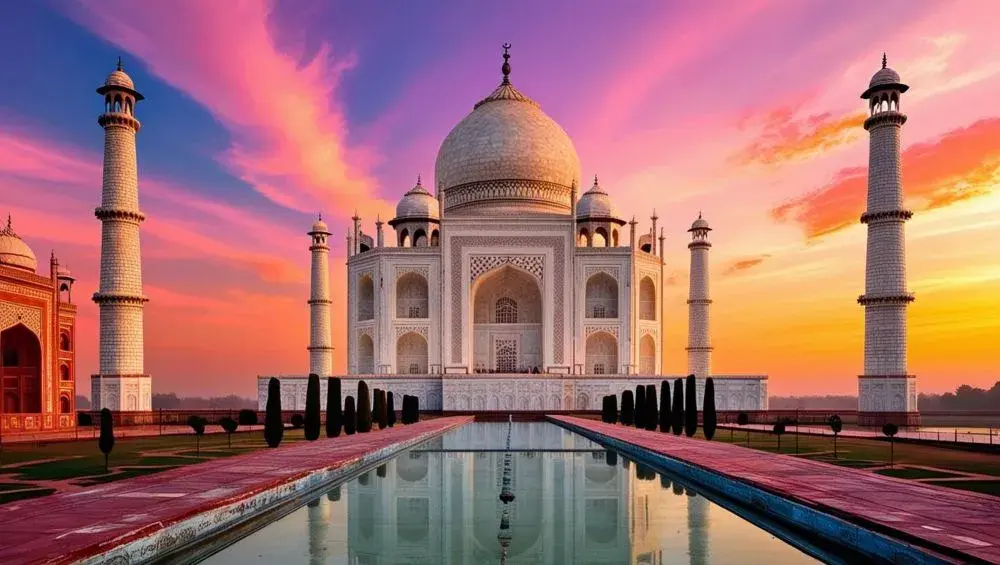
TAJ MAHAL, AGRA – The Monument of Everlasting Love:
-
Location: Agra, Uttar Pradesh
-
Built By: Emperor Shah Jahan
-
Built In: 1632-1653
-
Importance: UNESCO World Heritage Site, one of the Seven Wonders of the World
Brief History & Significance:
-
This stunning white marble tomb was constructed by Mughal Emperor Shah Jahan in honor of his favorite wife, Mumtaz Mahal.
-
Architecturally a wonder in itself, with delicate carvings, inlaid jewels and symmetrical gardens.
-
Its combination of Persian, Islamic, and Indian architectural styles means that it is among the best-known monuments in the world.
-
It is considered the loveliest monument of India and the symbol of love and devotion.
Qutub Minar, Delhi:
-
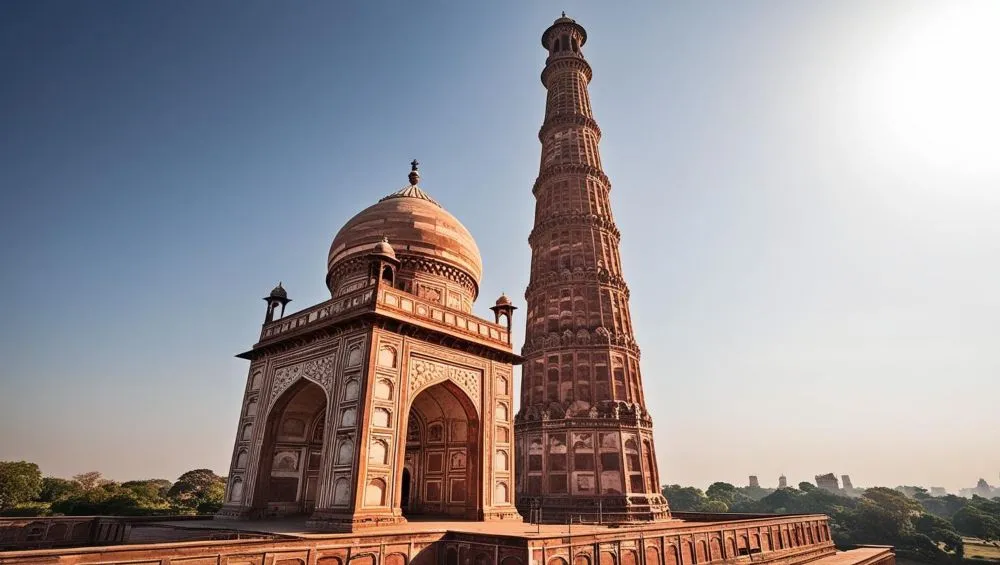
Location: Delhi
-
Constructed By: Qutb-ud-din Aibak
-
Built In: 1193
-
Importance: World’s tallest brick minaret
-
A massive 73-meter-high structure, the Qutub Minar was constructed to celebrate the victory of the Delhi Sultanate.
-
It was made from red sandstone and marble with elaborate Quranic inscriptions.
-
The Iron Pillar at its complex has not rusted in more than 1600 years, a miracle of ancient metallurgical skills.
Red Fort, Delhi – What Represents India’s Independence:
-
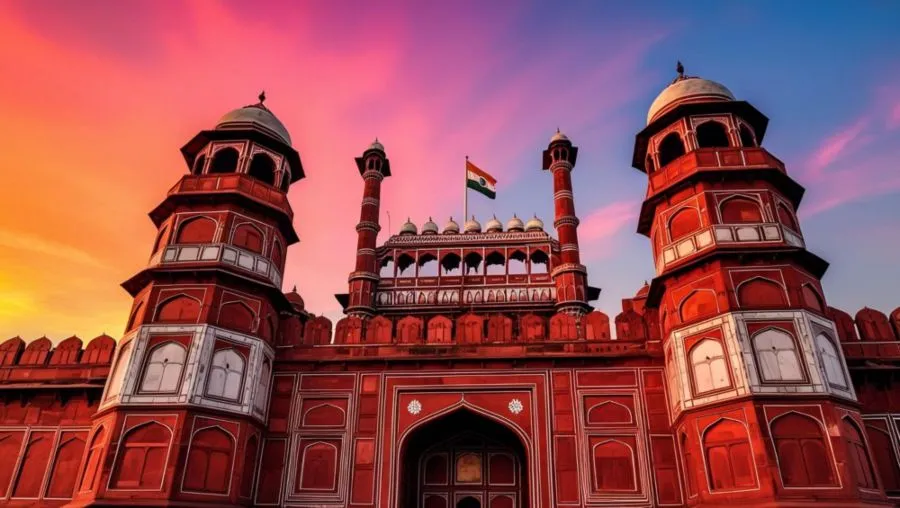
Location: Delhi
-
Designed & Built By: Emperor Shah Jahan
-
Built In: 1639
-
Importance: Word Heritage Site of UNESCO, mark of independence of India
Brief History & Significance:
-
The Red Fort was the primary residence of Mughal emperors for around 200 years.
-
Donned in a reddish sandstone material, the fort is a perfect blend of Persian, Timurid, and Indian architecture.
-
The Prime Minister of India hoists the national flag here every Independence Day (Aug. 15).
-
The entryway would lead to the Diwan-i-Aam (Hall of Public Audience) and Diwan-i-Khas (Hall of Private Audience), which symbolize the magnificence of the Mughal empire.
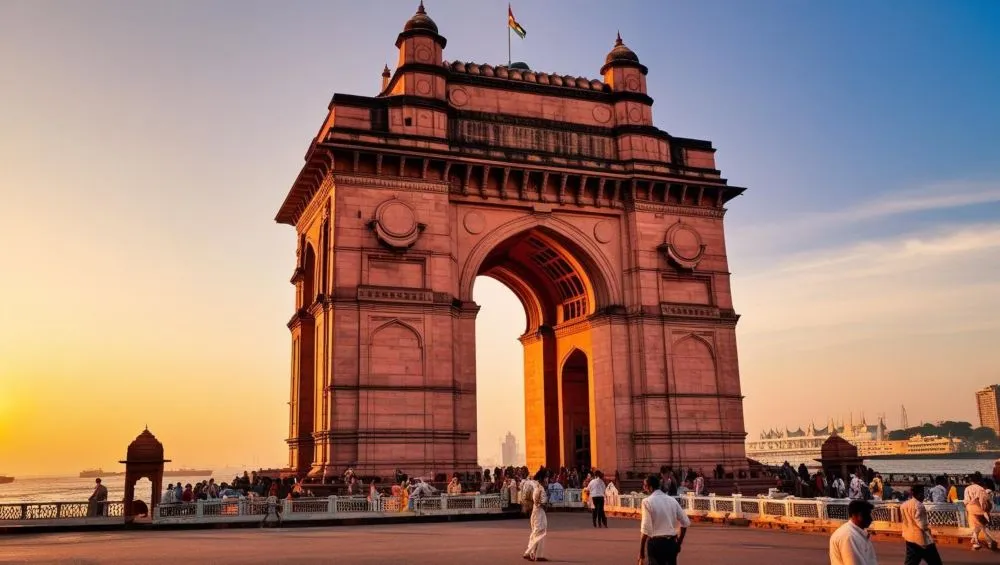
Gateway of India, Mumbai:
-
Location: Mumbai, Maharashtra
-
Made by: British Government
-
Built In: 1924
-
Importance: A symbol of colonial India and independence
-
An arch-monument constructed to honour the visit of King George V and Queen Mary to India
-
It is one of Mumby’s leading tourist attractions and overlooks the Arabian Sea.
-
Sporting representation of India’s colonial past and post independent endeavors.
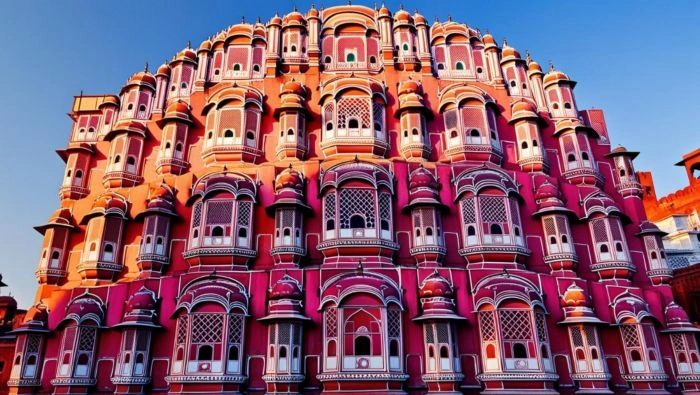
Hawa Mahal, Jaipur – The Palace of Winds:
-
Location: Jaipur, Rajasthan
-
Architects: Maharaja Sawai Pratap Singh
-
Built In: 1799
-
Importance: Distinctive honeycomb shape with 953 windows
Brief History & Significance:
-
The Hawa Mahal: A five-story palace made of pink sandstone, which makes Hawa Mhal an iconic landmark of Jaipur.
-
It has 953 Jharokhas, or small windows, that regulate airflow, keeping the palace cool.
-
The structure was originally constructed for royal women to view street celebrations without being seen by the public.
-
Its combination of Rajput and Mughal architectural styles marks it a unique and beautiful-hulled monument.
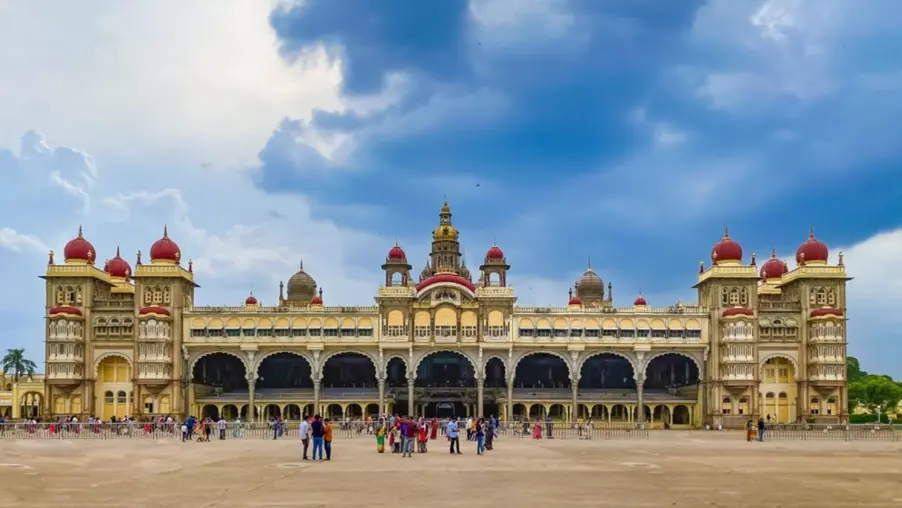
Mysore Palace, Mysore:
-
Location: Mysore, in the state of Karnataka
-
Built By: Wodeyar Dynasty
-
Built In: 1912
-
Importance: Famed for its Dussehra celebrations; grand palace
-
A beautiful example of Indo-Saracenic architecture, with domes, arches and gorgeous interiors.
-
During Mysore Dussehra, the palace glows with 100,000 bulbs that draw thousands to the city.
-
The most visited monuments in India after the Taj Mahal.
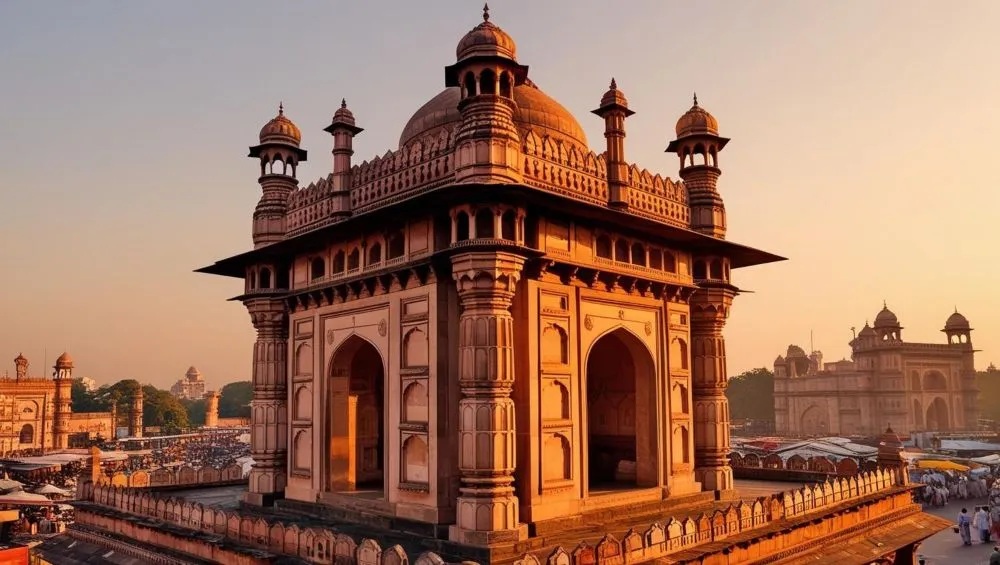
Charminar, Hyderabad
-
Location: Hyderabad, Telangana
-
Built By: Muhammad Quli Qutb Shah
-
Built In: 1591
-
Importance: Landmark of Hyderabad
-
The four grand arches and minarets of this square-shaped monument mark the founding of Hyderabad.
-
The architecture of the structure is a mix of Persian and Indian styles, adorned with intricate carvings.
-
Nearby markets, such as Laad Bazaar, are known for bangles, pearls and traditional items.
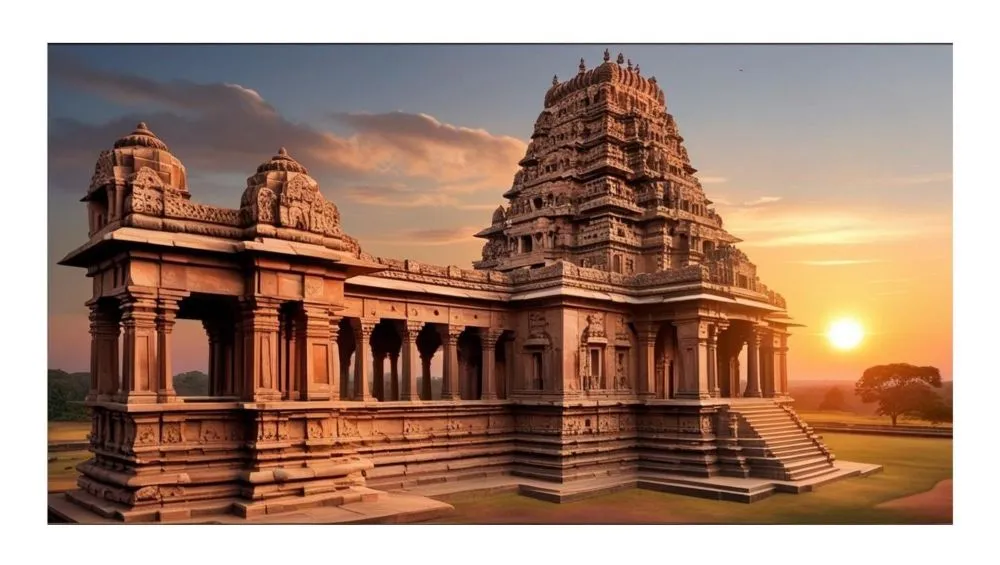
Sun Temple, Konark: The Chariot of the Sun God:
-
Location: Konark, Odisha
-
Designed By: He took a candid photograph of his wife and son at the ancient temple in Puri.
-
Built In: 13th Century
-
Importance: A UNESCO World Heritage Site, this temple is dedicated to Surya (the Sun God).
Brief History & Significance:
-
The Sun Temple of Konark is built like a huge chariot and has intricately carved stone Wheels, pillars and Horses.
-
The temple is dedicated to Surya, the Sun God and is a remarkable specimen of ancient Hindu temple architecture.
-
The sculptures and carvings portray life in the 13th century and cast divine and mythological figures.
-
It is both one of the most renowned monuments of India and an attraction for devotees and history lovers here.
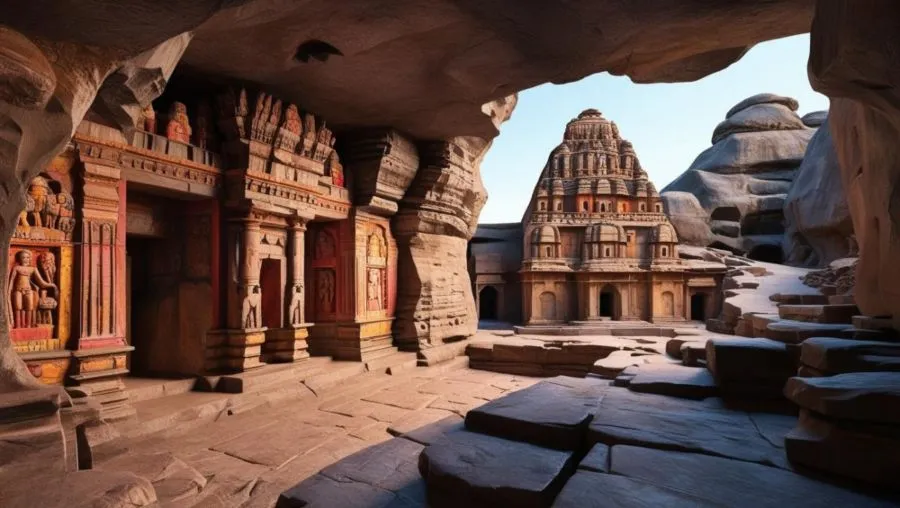
Ajanta & Ellora Caves, Maharashtra:
-
Location: Aurangabad, Maharashtra
-
Built By: Several Dynasties
-
Constructs: 2nd Century BCE – 10th Century CE
-
Significance: A UNESCO World Heritage Site of Buddhist and Hindu cave temples
-
Ajanta Caves are well known for their beautiful Buddhist paintings and sculptures.
-
Rock-cut temples of Hindu, Jain and Buddhist persuasion at Ellora Caves
-
The Kailasa Temple (Cave 16) is the world’s largest monolithic rock excavation.
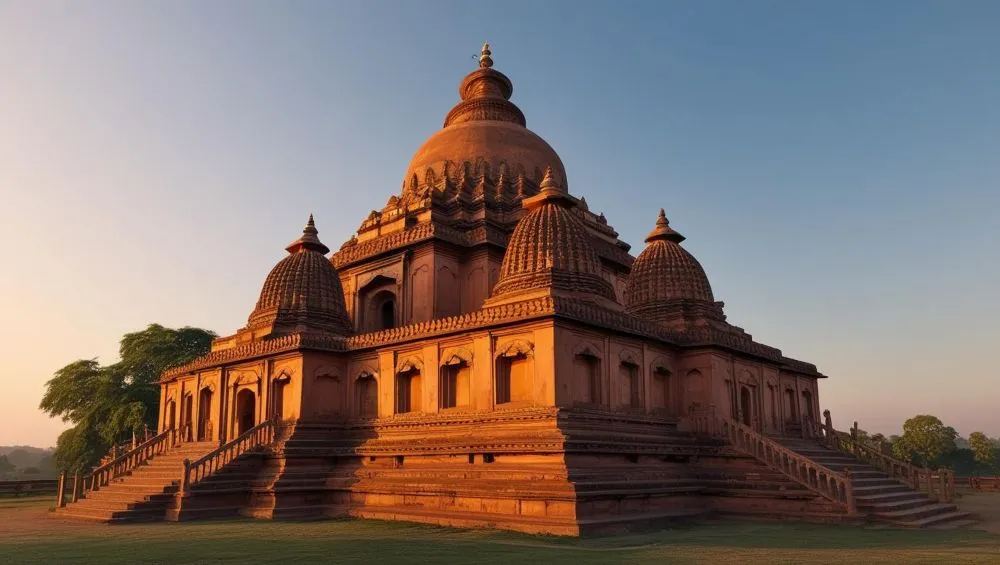
Sanchi Stupa, Madhya Pradesh:
-
Location: Sanchi, Madhya Pradesh
-
Built By: Emperor Ashoka
-
Built In: 3rd Century BCE
-
Importance: UNESCO World Heritage site, Buddhist pilgrimage destination
-
India has one of the oldest stone edifices, erected by Ashoka the Great.
-
Illustrates Buddhist concepts and antiquated Mauryan artistry
-
India’s Buddhist heritage is represented by the Great Stupa.
What Qualifies As A Monument?
-
A monument is a statue or a structure that has cultural, historical and social significance, and it is recognized as part of the national heritage.
-
The Archaeological Survey of India (ASI) decides if a monument gets a status based on its historic value, architectural uniqueness and cultural significance.
|
Criteria |
Description |
|
Historical Significance |
It must be linked to an important event or era. |
|
Architectural Uniqueness |
Showcases distinctive styles, craftsmanship, or techniques. |
|
Cultural Value |
Holds religious, social, or artistic importance. |
|
Preservation Status |
It must be protected under heritage laws. |
Overview of Monuments in India:
The Rich Heritage of India:
|
Architectural Style |
Region |
Examples |
|
Indo-Islamic |
North India |
Taj Mahal, Qutub Minar |
|
Dravidian |
South India |
Brihadeeswarar Temple |
|
Buddhist Rock-Cut |
Western India |
Ajanta & Ellora Caves |
|
Colonial |
East India |
Victoria Memorial |
Key Categories of Monuments in India:
|
Category |
Description |
Examples |
|
Historical Monuments |
Structures linked to significant historical events. |
Red Fort, Golconda Fort |
|
Important Monuments |
Recognized for cultural or national identity. |
India Gate, Gateway of India |
|
Ancient Monuments |
Older than 1000 years and depicts early civilizations. |
Sanchi Stupa, Sun Temple, Konark |
Archaeological Survey of India: The Journey of Preservation:
-
The ASI plays a vital role in identifying, preserving, and maintaining India’s monuments.
-
It conducts excavations, structural conservation, and documentation of heritage sites.
the journey of the working of the Archaeological Survey of India (ASI):
The Journey of the Archaeological Survey of India (ASI)
Step 1: Initiation and Planning:
-
Established in 1861 by Lord Canning and perfectly established by Alexander Cunningham later the first Director-General.
-
Works under the Ministry of Culture.
-
Cut up into 34 Circles all over India, each Circle is controlled by a Superintending Archaeologist.
Step 2: Doings and Duties:
-
Carries out Excavations and Surveys: Locates and investigates archaeological sites.
-
Local Conservation and Maintenance: Protects and preserves historical monuments and sites.
-
It regulates archaeological activities: It administers the Ancient Monuments and Archaeological Sites and Remains Act, 1958, and the Antiquities and Art Treasures Act, 1972.
-
It covers inscriptions and coins as well as their interpretation.
-
Site Museums: The site museums serve to display artifacts from the excavations near the site after excavation.
Step 3: Research, Compilation, and Documentation:
-
Has technical reports: Documents results of excavations and research.
-
Underwater archaeology: Investigates and excavates submerged sites.
-
Horticultural Operations: Conserves greenery and green spaces in the area of monuments.
Step 4: Train & Co-train:
-
Teaches Archaeology: Provides education in archaeological methodologies.
-
Works in Unity with International Organizations: Engages in global archeological projects.
Step 5: Preserve and Protect:
-
Preserves National Heritage: Protects monuments and sites of national significance.
-
CHEMICAL PROTECTION: It uses innovative techniques to preserve monuments from decay
Detailed Sections on Other Famous and Historical Monuments:
India is a country with some of the most magnificent monuments in the world, each telling a story of the glorious past of India. Dynasties and rulers have shaped India’s rich heritage. This diversity includes everything from ancient temples to grand forts. These are some of the enduring historical monuments in India.
We will discuss famous Indian monuments from various regions. We’ll explore their history, architectural styles, cultural importance, and legends. Also, we’ll cover UNESCO World Heritage Sites in India, explaining what they are and listing the monuments included.
Sub-Sections by Region or Era:
-
Northern India
-
Southern India
-
Eastern India
-
Western India
Northern India – A Fusion of Mughal Grandeur and Ancient Heritage:
Some of the most famous historical monuments of India are in Northern India and it is known for their grandeur and exquisite craftsmanship.
Jaisalmer Fort, Rajasthan
-
Historical Background: Rawal Jaisal was built in 1156 AD.
-
Architectural Style: Yellow sandstone construction that blends into the Thar Desert surroundings.
-
Cultural Significance: Among the only “living forts” that are still inhabited.
Southern India – An Exploration of Dravidian & Vijayanagar Architecture:
Southern India is best known for its ancient monumental structures in India, temples, forts and blah blah.
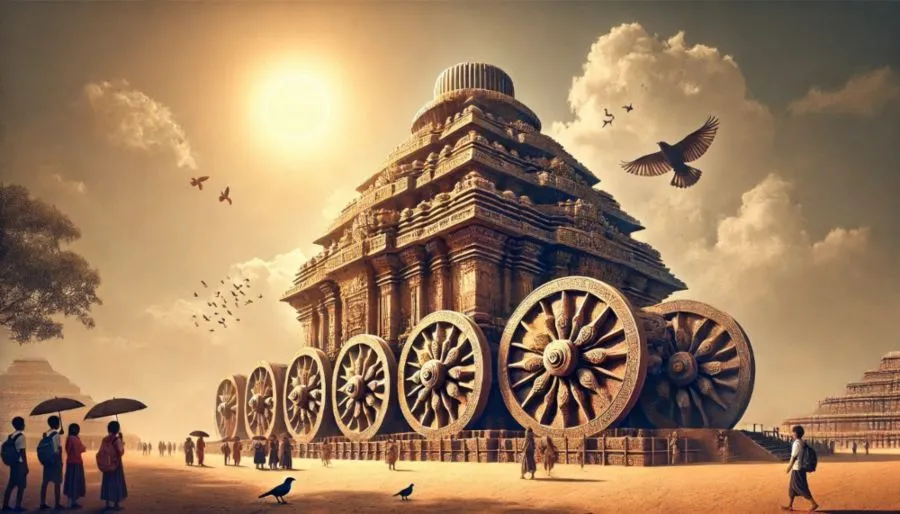
Brihadeeswarar Temple, Tamil Nadu:
-
Historical Background: Constructed by Raja Raja Chola I in 1010 AD
-
Architecture style: Dravidian, monumental vimana (tower), monolithic Nandi statue.
-
UNESCO World Heritage Site, an important Hindu pilgrimage site
Key Features
-
A towering vimana (tower) that rises to a height of more than 200 feet.
-
Detailed carvings and sculptures of Hindu gods and myths.
-
The monolithic Nandi (sacred bull) statue poured out of a rock.
Gol Gumbaz, Karnatak:
-
Architectural Style: Indo-Islamic, has the second biggest dome worldwide.
-
Cultural Importance: It is Famous for its “whispering gallery,” where even soft sounds echo repeatedly.
Eastern India – A Land of Temples and Colonial Architecture:
India’s eastern region is rich in ancient monuments and temples, plus colonial-era landmarks.
Victoria Memorial, Kolkata:
-
Historical Background: Erected in the years 1906–1921 in memory of Queen Victoria.
-
Architectural Style: Indo-Saracenic, with white marble construction and gardens.
-
Cultural Importance: Home to colonial relics, among Kolkata’s leading sites.
Mahabodhi Temple, Bihar:
-
Historical Background: Built by Emperor Ashoka 3 century BCE & Renovated in 5 century AD.
-
Architectural Style: Buddhist temple, featuring a pyramidal tower 50 m (160 ft).
-
Cultural Significance: UNESCO World Heritage; site of Buddha’s enlightenment
Western India — Forts and rock-cut wonders:
Western India has some of the most famous monuments of India, including rock-cut caves and sea-facing forts.
Maharashtra: Ajanta & Ellora Caves:
-
Historical Background: Construction from 2nd century BCE – 10th century CE.
-
Architectural style: Rock-cut Buddhist, Jain and Hindu temples.
-
Cultural Significance: It is a UNESCO World Heritage site. It features the Kailasa Temple, which is the largest monolithic rock excavation.
Rani Ki Vav, Gujarat:
-
Historical Background: Built in the 11th century by Udayamati.
-
Architectural Guide: This is a Stepwell structure carving of Hindu deities.
-
Culturally Relevant: It is a UNESCO World Heritage Site and shows off centuries of amazing water management.
Exploring UNESCO World Heritage Sites in India:
Criteria for UNESCO World Heritage Site Designation:
A site must meet at least one of the following criteria to be designated a UNESCO World Heritage Site in India:
-
Cultural Significance – Unique artistic, historical, or religious importance.
-
Architectural Brilliance – Masterpieces of Human Creativity.
-
Historical Value – Representing significant historical periods.
-
Natural Importance – Outstanding ecological or geological value.
List of UNESCO World Heritage Sites in India:
|
UNESCO World Heritage Site |
Category |
|
Taj Mahal, Agra |
Cultural |
|
Qutub Minar, Delhi |
Cultural |
|
Ajanta & Ellora Caves, Maharashtra |
Cultural |
|
Sun Temple, Konark |
Cultural |
|
Mahabodhi Temple, Bihar |
Religious |
|
Kaziranga National Park |
Natural |
|
Great Himalayan National Park |
Natural |
Conclusion:
India’s great monuments are timeless treasures. They tell the story of the country’s rich history, architectural skill, and cultural variety. From ancient temples to grand forts, each structure holds a unique story of past civilizations. Keeping India’s historical monuments safe helps future generations appreciate their heritage and legacy. Let us cherish and protect these wonders, keeping India’s glorious past alive for centuries to come.
Other Related Sections
NCERT Solutions | Sample Papers | CBSE SYLLABUS| Calculators | Converters | Stories For Kids | Poems for kids | Practice Worksheets | Formulas | Parent Resources
Related blogs:
Indus Valley Civilization: Learn about the history of Civilization
What Causes Day and Night?: Detailed science behind the change from day to night.
Active and Dormant Volcanoes in India: Comprehensive overview of India’s volcanoes.
Recent Blogs
- Orchids’ tech whiz kids claim 1st and 3rd spots at Robotex India National Championship 2025
- TechnoXian World Cup 2025: Orchids’ little technocrats clinch gold and silver at global stage
- CAPMUN 3.0: Jodhpur conference sees over 280 students debate global challenges
- UNICEF sounds alarm over childhood obesity; can CBSE’s ‘sugar board’ mandate help ease the crisis?
 Orchids first grader Mannem Nagasai Aashritha triumphs in Germany’s 6.3km open water swimming event